When most people think about water damage, they picture heavy rainfall, burst pipes, or flooding rivers. But if you live in a hot, arid climate like Killeen, TX or Phoenix, AZ, you might assume your dry environment offers some protection. In reality, the opposite is often true. Extreme heat can silently accelerate water damage, making what starts as a small leak into a costly disaster faster than you ever expected.
Whether you are dealing with a hidden pipe leak, a roof intrusion, or post-storm flooding, understanding how heat interacts with moisture is the first step toward protecting your home. In this guide, we explore exactly how hot climates worsen water damage and what homeowners in Killeen and Phoenix can do about it.
Why Heat and Water Damage Are a Dangerous Combination
Water damage does not operate in a vacuum. Temperature plays a huge role in how quickly damage spreads, how deep it penetrates building materials, and how severe the secondary effects become. In hot climates, three key factors combine to create a more damaging scenario than in cooler regions:
- Accelerated evaporation that draws moisture deeper into walls and foundations
- Rapid mold and bacterial growth fueled by heat and residual humidity
- Thermal expansion and contraction that widens cracks and structural gaps over time
Understanding each of these helps homeowners in Killeen and Phoenix recognize why prompt action after any water intrusion is so critical in their specific climates.
1. High Temperatures Speed Up Surface Drying – But Not Deep Drying
One of the biggest misconceptions in hot climates is that because it is dry outside, water damage will simply dry out on its own. The problem is that heat evaporates surface moisture quickly – but it also drives moisture deeper into porous materials like drywall, wood framing, insulation, and concrete.
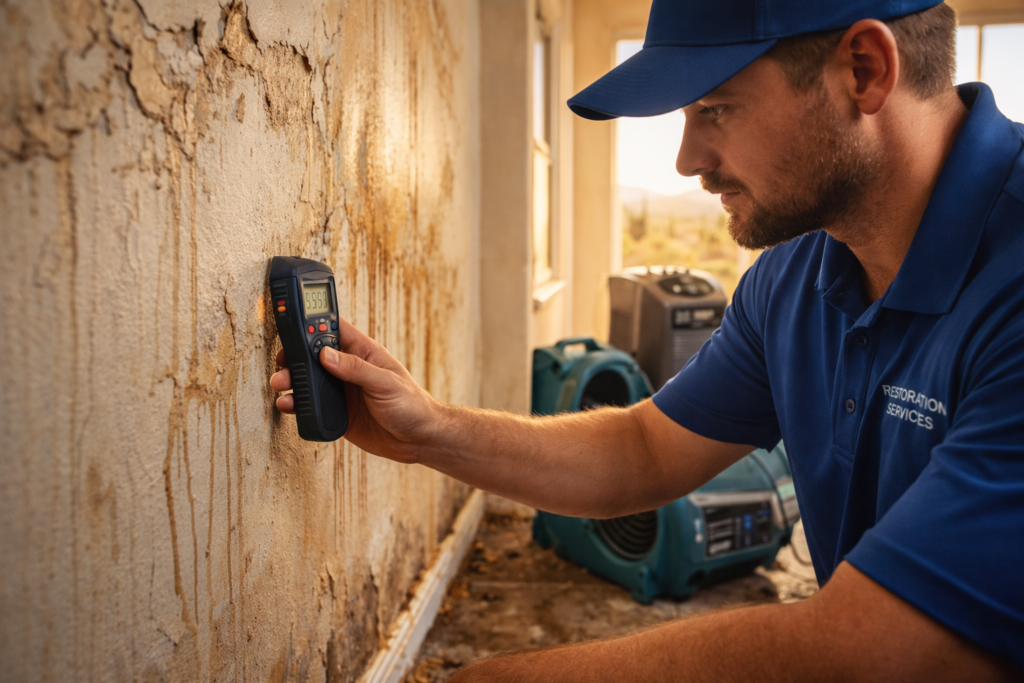
Think of it like pressing a wet sponge in the sun. The outer layer dries almost immediately, but the interior remains saturated. In your home, this means the surface of a wet wall may feel dry to the touch within hours, while the interior studs, insulation batts, and subfloor beneath are still soaking. This hidden moisture is where the real long-term damage occurs.
In Killeen, summer temperatures regularly reach the upper 90s°F. In Phoenix, temperatures above 110°F are common. At these extremes, the deceptive “surface dry” effect is especially pronounced, making professional moisture detection essential after any water event.
2. Mold Grows Faster in Hot, Humid Post-Damage Conditions
Mold thrives in temperatures between 77°F and 86°F – which describes a significant portion of the year in both Killeen and Phoenix. When water damage introduces moisture into walls, floors, or ceilings in these climates, the warm indoor and outdoor temperatures create near-perfect mold growing conditions.
In cooler climates, homeowners may have 48 to 72 hours before mold becomes a serious concern after water damage. In hot climates, mold colonies can begin forming within 24 hours. Behind walls or under flooring where airflow is limited and heat is trapped, mold can establish itself even faster.
This is one of the most compelling reasons to call a professional immediately after any water damage event in Killeen or Phoenix. Waiting even a single day to assess the damage – let alone begin restoration – can transform a water removal job into a full mold remediation project, multiplying costs significantly.
Phoenix homeowners dealing with water damage can learn more about the specific risks and remediation options available in the region by visiting Water Damage Repair Phoenix.
3. Thermal Expansion Creates New Entry Points for Water
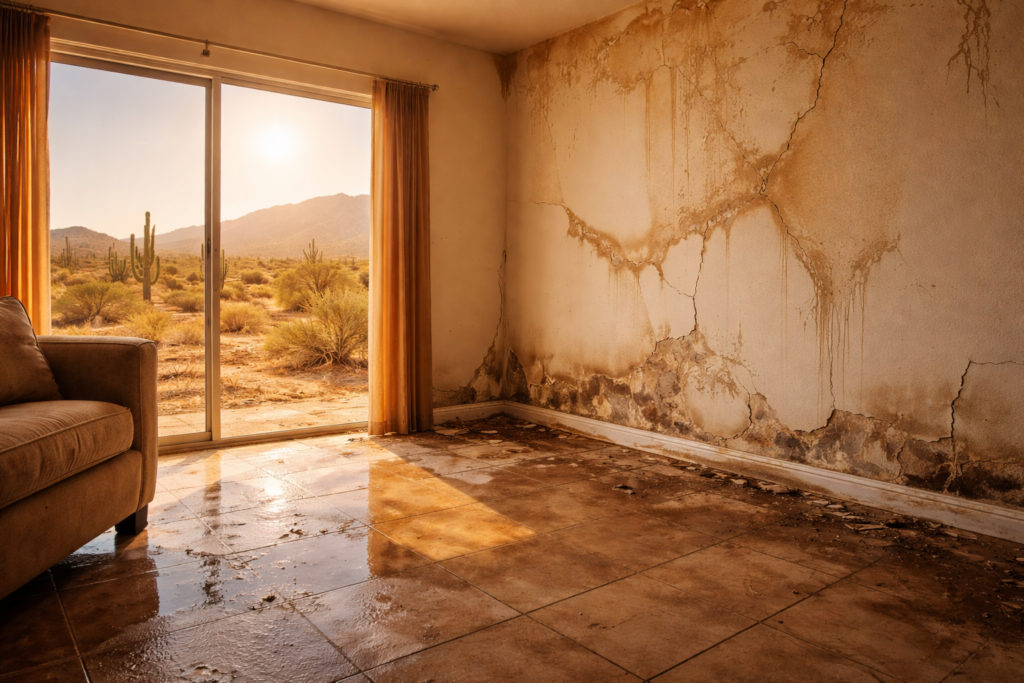
In hot climates, building materials expand during the day under intense sun and contract overnight as temperatures drop. This daily thermal cycling gradually creates micro-cracks in stucco, roof flashing, window seals, foundation slabs, and pipe joints — all of which become entry points for water during the monsoon season, summer storms, or plumbing failures.
Killeen sits in Central Texas, where the climate delivers intense summer heat followed by occasional heavy thunderstorms. This combination is particularly punishing for homes. Thermal expansion opens tiny gaps, and then a sudden rainstorm or plumbing event sends water rushing in through those same openings.
Phoenix faces a similar dynamic with its monsoon season, typically running from mid-June through September. Homes baked by months of dry heat suddenly face intense rain and wind events, and the cracks formed by thermal expansion provide pathways for water to reach structural components that were never designed to get wet.
4. AC Systems Can Worsen Hidden Moisture Problems
Air conditioning is a necessity, not a luxury, in both Killeen and Phoenix. But your AC system can actually contribute to hidden moisture damage in two key ways:
- Condensate line clogs: AC units produce condensation as they cool air. If the condensate drain line clogs – a common occurrence – water backs up into the air handler, drip pan, and eventually into your ceiling, walls, or attic. In climates where AC runs almost continuously, this is a year-round risk.
- Vapor drive from temperature differentials: When the interior of your home is significantly cooler than the outside air, moisture from the warm exterior is driven inward through walls toward the cool interior. If your wall assemblies are not properly vapor-managed, this can result in chronic moisture accumulation inside walls even without any plumbing or roof failure.
Regular AC maintenance and inspection of condensate lines is a simple step that can prevent significant water damage events in hot climates.
5. Slab Foundations Are Especially Vulnerable in Hot Climates
Most homes in Killeen and Phoenix are built on concrete slab foundations rather than crawl spaces or basements. While slab foundations have advantages, they present unique challenges when it comes to water damage.
Plumbing pipes run through or beneath the slab in most of these homes. When a slab leak occurs – a pipe failure beneath the concrete foundation – water seeps upward through the concrete and into flooring, walls, and cabinetry. In hot climates, the dry soil around the slab also tends to shrink during drought conditions, creating movement and stress on foundation plumbing that accelerates pipe wear and failure.
Slab leaks are notoriously difficult to detect because the damage occurs below a solid concrete surface. By the time visible symptoms appear – warm spots on the floor, cracked tiles, unexplained spikes in water bills, or musty odors – significant water damage may already have occurred beneath the surface. Professional leak detection equipment is often necessary to locate and address these issues before they escalate.
Warning Signs Hot-Climate Homeowners Should Never Ignore
Because hot climates can mask the early warning signs of water damage, homeowners in Killeen and Phoenix need to be especially vigilant. Watch for:
- Unexplained increases in your water bill
- Musty or earthy odors in any room, especially bathrooms, kitchens, or laundry areas
- Staining or discoloration on walls or ceilings, even if it looks dry
- Warping, bubbling, or soft spots in flooring
- Visible efflorescence (white salt deposits) on concrete or stucco surfaces
- Cracking near windows, doors, or at wall-ceiling joints
- AC system running constantly but not cooling effectively (possible condensate issue)
None of these signs should be written off as normal wear and tear. In hot climates, they are often the first visible clues of a moisture problem that has been developing for some time.
What to Do Immediately After Water Damage in a Hot Climate
Speed is everything in hot-climate water damage situations. Here is what you should do from the moment you identify a problem:
- Stop the water source if possible (shut off the main water supply or affected fixture)
- Remove standing water immediately using a wet/dry vacuum or mop
- Move furniture, rugs, and belongings away from wet areas
- Run fans and open windows if outdoor humidity allows (avoid this during humid monsoon periods)
- Do NOT use standard household fans as a substitute for professional drying equipment – they can spread mold spores
- Call a professional water damage restoration company right away – do not wait to see “if it dries out”
Professional restoration teams use industrial dehumidifiers, air movers, thermal imaging cameras, and moisture meters to fully address water damage that is invisible to the naked eye. In hot climates, this equipment is not optional – it is essential to prevent mold and structural damage from developing in the hours and days after a water event.
Get Professional Help in Killeen and Phoenix
If you are in the Phoenix area and are facing water damage in your home, do not wait. Visit waterdamagerepairphoenix.us to connect with certified water damage restoration specialists who understand the unique challenges of the desert Southwest climate.
For homeowners and property owners in Killeen, TX, fast and professional water damage restoration is available locally. Visit Killeen TX Water Damage to learn more about emergency water damage services in the Killeen area and to request immediate assistance.
Both cities demand fast, expert responses to water damage. The climate leaves no room for delay.
Final Thoughts
Hot climates like Killeen and Phoenix are deceptively hazardous when it comes to water damage. The combination of intense heat, thermal expansion, rapid mold growth conditions, slab foundation vulnerabilities, and air conditioning risks creates a uniquely challenging environment for homeowners dealing with any moisture intrusion.
The most important takeaway is this: do not let the dry exterior of your climate give you a false sense of security. Inside your walls, beneath your floors, and behind your ceilings, heat and moisture are a damaging combination. Prompt professional action is always the right call – and in a hot climate, it is even more urgent.
By staying informed, watchful, and ready to act, homeowners in Killeen and Phoenix can protect their most valuable asset from the silent, accelerated damage that hot climates bring to water intrusion events.
Leave a Reply