
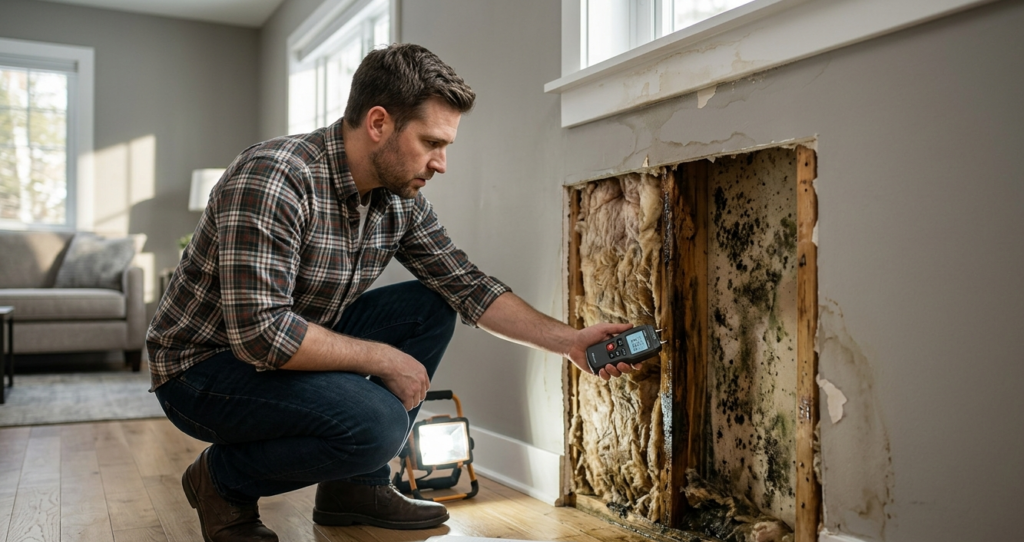
Most water damage is not the dramatic kind – no burst pipe flooding your living room, no storm water rushing through the front door. The most destructive water damage is the kind you cannot see. It hides inside walls, under floors, above ceilings, and behind cabinets – rotting wood, feeding mold, and weakening your home’s structure silently for weeks or months before you ever notice anything wrong.
By the time most homeowners realize something is off, the damage has already spread far beyond where it started.
Here are 5 signs your home may have hidden water damage right now – and what to do about each one.
Sign 1 – Your Water Bill Has Gone Up for No Reason
If your water usage hasn’t changed but your bill keeps climbing, there is a good chance water is going somewhere it shouldn’t. A slow leak inside a wall or under a slab can run continuously without ever making a visible puddle.
What to check: Turn off every faucet, appliance, and water source in your home. Go to your water meter and watch it for 10 to 15 minutes. If the meter is still moving, water is leaking somewhere in your system.
Even a small hidden leak – the kind that loses just a few drips per minute – can cause significant moisture buildup inside wall cavities over time. Professional plumbing leak detection can pinpoint exactly where the leak is without opening up your entire wall.
Sign 2 – You Smell Mold or Mildew But Cannot Find It
Mold has a very distinct musty, earthy odor. If you walk into a room and notice that smell — especially if it gets stronger near a specific wall, cabinet, or section of floor — mold is almost certainly present somewhere you cannot see.
In Phoenix, hidden moisture is especially dangerous because homeowners often assume the dry desert climate protects them. It does not. Air conditioning systems create condensation. Monsoon season brings sudden heavy moisture. Slab foundations develop slow leaks. Any of these can create the damp, warm conditions mold needs to thrive inside your walls.
Do not ignore a musty smell. Do not cover it with air freshener. It will get worse, and the longer mold grows undetected, the more expensive the remediation becomes. Our mold removal services use HEPA equipment and antimicrobial treatments to eliminate mold at the source – not just the surface.
For more on mold timelines and what to expect, read our guide on how long mold takes to grow after water damage in Phoenix.
Sign 3 – Your Walls or Ceilings Are Discolored, Bubbling, or Warping
Paint and drywall react visibly to moisture – but by the time you see the surface change, water has usually been present inside the wall for a while already.
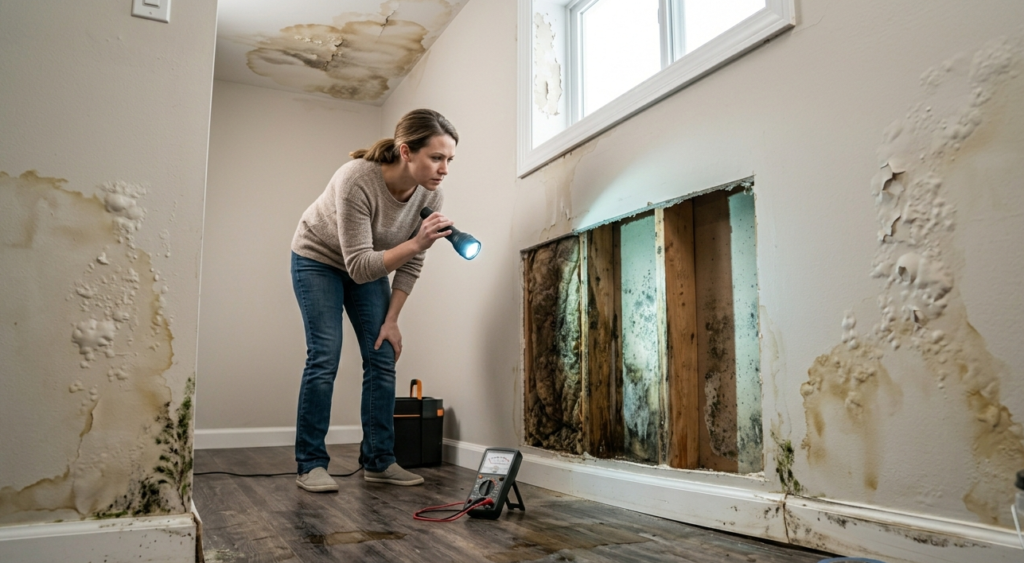
Discoloration – Yellow, brown, or rust-colored stains on walls or ceilings indicate water has soaked through the drywall. Stains that keep expanding or reappearing after painting are a clear sign the moisture source has not been fixed.
Bubbling or peeling paint – Paint bubbles when moisture gets trapped between the drywall surface and the paint layer. This is not a cosmetic issue – it is a structural warning.
Warping or bowing – Walls that are no longer flat, or ceiling sections that appear to be sagging, indicate significant moisture saturation inside the structure. This needs immediate attention.
Soft drywall – Press lightly on your walls, especially near baseboards or under windows. Drywall that feels soft, spongy, or crumbles slightly has absorbed water. Our wall dry out service uses industrial-grade drying equipment to eliminate moisture from inside the wall cavity before it causes further structural damage.
If the ceiling is showing damage, do not wait – ceiling water repair is significantly more complex and costly the longer saturation continues.
Sign 4 – Your Floors Feel Soft, Spongy, or Are Starting to Warp
Your floors tell you a lot about what is happening beneath them.
Hardwood – Cupping or crowning in hardwood planks means moisture is present in or under the boards. Once hardwood reaches this stage, time is critical. Our hardwood floor drying service can assess whether boards can be saved or need replacement.
Tile – A tile floor that sounds hollow when you tap it, or has grout that is cracking and crumbling, may have water damage underneath. The tile itself may be intact while the subfloor below it is rotting.
Soft spots – Any area of your floor that feels spongy or gives slightly underfoot has moisture in the subfloor. This is a structural issue that gets worse the longer it sits.
Carpet that won’t dry – Carpet that stays damp for more than 24 hours after any moisture event has likely saturated the padding underneath. Wet carpet padding is one of the fastest environments for mold growth in a home. Our carpet water restoration team handles extraction, drying, and assessment of what can be saved.
Sign 5 – You Notice Rust Stains, Efflorescence, or Cracks Near Your Foundation
This one is easy to miss because it happens in areas most homeowners don’t look at regularly — near the base of exterior walls, in the garage, in the crawl space, or around the foundation.
Efflorescence – White, chalky deposits on concrete or brick walls are caused by water moving through the material and leaving mineral deposits behind. This is a direct sign of water infiltration through your foundation or exterior walls.
Rust stains – Orange or brown streaking on concrete near pipes or foundation walls indicates water is consistently present and causing metal components to corrode.
Hairline cracks that are damp – Foundation cracks are common in older Phoenix homes. But a crack that feels damp to the touch or shows water staining means active moisture is entering. Foundation crack sealing should be addressed before the next monsoon season brings heavier moisture.
If you have a crawl space, moisture in that area spreads directly into your subfloor and wall framing above it. Our crawl space drying service eliminates moisture at the source before it travels upward into your living areas.
What to Do If You Spot Any of These Signs
Do not wait to see if it gets worse. Hidden water damage only moves in one direction without intervention.
Step 1 – Do a full walk-through of your home looking for any of the five signs above. Check under sinks, behind toilets, under appliances, in the attic, and near the foundation.
Step 2 – If you find anything suspicious, get a professional moisture meter inspection done. This identifies exactly how much moisture is present and where it has traveled – without opening up walls unnecessarily.
Step 3 – If moisture is confirmed inside walls or under floors, professional structural drying is the only reliable way to bring moisture levels back to safe levels before mold establishes itself or wood rot begins.
Step 4 – Document everything for your insurance claim. Our insurance assistance support team can help you navigate the claims process and make sure you get what you are owed.
For Phoenix homeowners dealing with any of these warning signs, Water Damage Repair Phoenix provides 24/7 emergency response and professional inspections across the entire Valley. Call (602) 804-0118 any time — our 24-hour emergency service is always ready.
If you are in Arkansas and recognizing these same warning signs in your home, the team at Little Rock AR Water Damage specializes in identifying and stopping hidden water damage before it becomes a full structural problem. Fast response and professional equipment make all the difference.
The U.S. Centers for Disease Control and Prevention outlines the health risks of indoor mold exposure and recommends professional assessment for hidden moisture – particularly important for households with children, elderly residents, or anyone with respiratory conditions.
Frequently Asked Questions
How do I find hidden water damage in my home? Look for musty smells, discolored walls or ceilings, soft spots on floors, bubbling paint, unexplained increases in your water bill, and any efflorescence or dampness near your foundation. A professional moisture meter inspection can confirm what you cannot see.
Can hidden water damage make you sick? Yes. Mold caused by hidden moisture produces spores that can cause respiratory issues, allergic reactions, and other health problems. The CDC recommends addressing any confirmed mold or hidden moisture promptly.
How long can water damage go undetected? Slow leaks can go undetected for months or even years, especially inside walls or under slabs. By the time visible signs appear, damage is typically already significant.
Is hidden water damage covered by homeowners insurance? It depends. Sudden and accidental damage is usually covered. Damage from long-term slow leaks that were not addressed is often denied as a maintenance issue. Our insurance assistance support team can help you understand your policy and file correctly.
What is the first thing to do if I suspect hidden water damage? Call a professional for a moisture meter inspection before doing anything else. Cutting into walls or pulling up floors without knowing where the moisture is can spread the problem. Get a proper assessment first, then act on what the data shows.
Leave a Reply